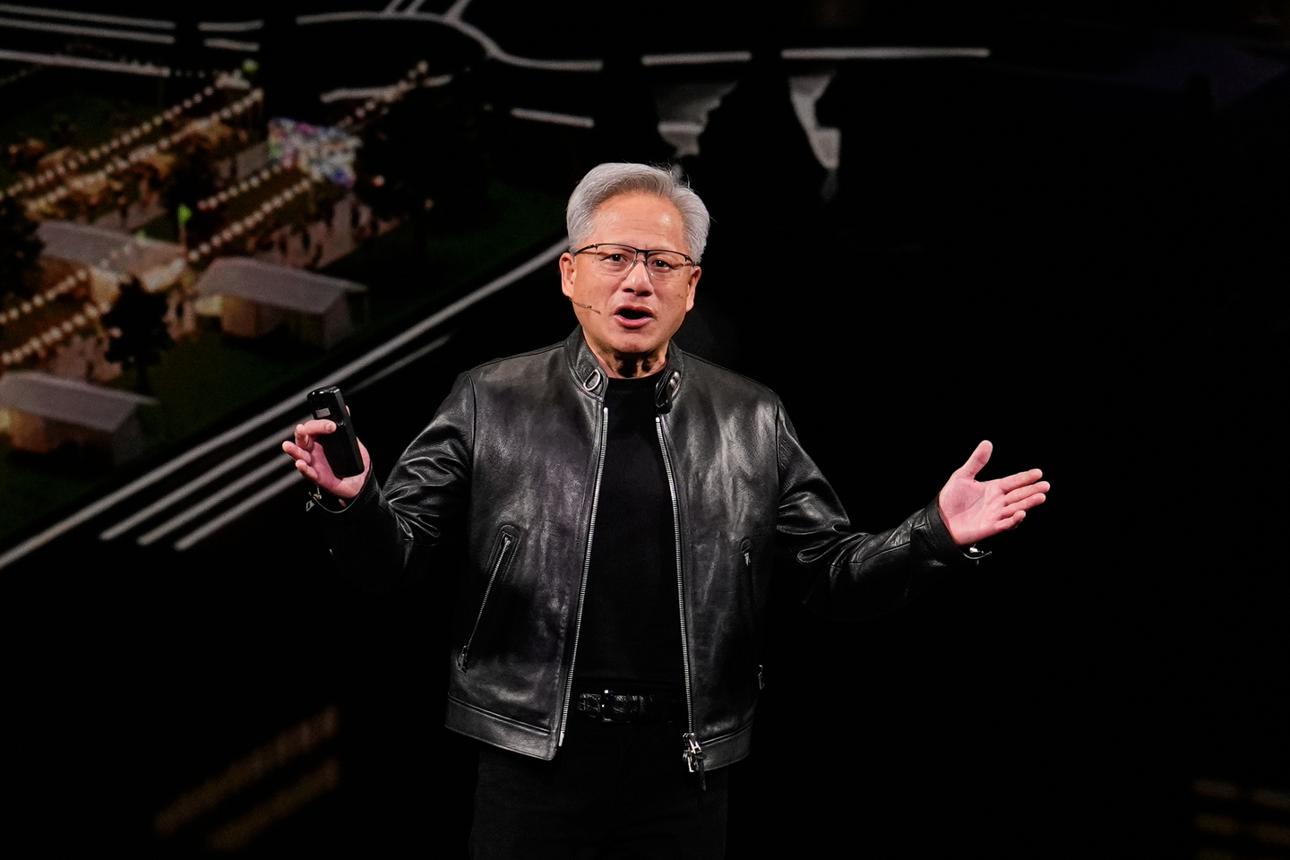
For more than three decades, Jensen Huang has been synonymous with NVIDIA. His signature black leather jacket, energetic keynote presentations and ambitious vision for accelerated computing have made him one of the most recognizable figures in the global technology industry.
But on November 12, 2026, NVIDIA announced a leadership transition that few in the technology world could have anticipated: Huang had resigned as President, Chief Executive Officer and a member of the company's Board of Directors, effective immediately.
Colette Kress, NVIDIA's long-serving Executive Vice President and Chief Financial Officer, was appointed Interim CEO while the Board begins its search for a permanent successor. Harvey C. Jones was appointed the company's first-ever Chair of the Board.
The announcement marks a significant moment for one of the most influential companies in the global AI ecosystem.
Yet the implications extend far beyond a change in executive leadership. NVIDIA's position at the centre of the AI economy raises a much bigger question: Can an industry built around one of its most influential leaders continue to evolve without him at the helm?
1. More Than a CEO: How Jensen Huang Shaped the AI Era
Jensen Huang co-founded NVIDIA in 1993 and led the company through its transformation from a graphics-processing specialist into a central force in accelerated computing and artificial intelligence.
His influence has extended well beyond the company's financial performance.
Under Huang's leadership, NVIDIA helped redefine the role of GPUs in modern computing. What began with graphics processing evolved into a broader computing platform supporting scientific research, high-performance computing, data centres and large-scale AI development.
The company's CUDA software platform was particularly important in building a developer ecosystem around its hardware. Over time, NVIDIA's competitive position became increasingly connected not only to its chips, but also to the software, networking, systems and developer communities surrounding them.
This combination helped establish NVIDIA as a critical infrastructure provider for the AI industry.
Huang also became an influential communicator of the industry's direction. Through keynote presentations and public discussions, he consistently highlighted the importance of accelerated computing, AI factories, robotics, digital twins and the next generation of intelligent systems.
His ability to connect technological developments with a broader business vision helped make NVIDIA's strategy a reference point for companies across industries.
For many observers, Huang was not simply leading a semiconductor company. He was helping articulate the direction of an entirely new computing era.
Leadership transitions at major technology companies often raise concerns about strategic continuity. Those questions become particularly significant when a founder has played such a central role in shaping the company's identity and direction.
However, NVIDIA's long-term position cannot be understood through its CEO alone.
Its competitive advantages are distributed across several interconnected layers:
A deeply integrated technology platform.
NVIDIA's business extends across GPUs, CPUs, networking, systems and software. Its value proposition is increasingly based on delivering integrated computing infrastructure rather than individual hardware components.
A mature developer ecosystem.
CUDA and the wider NVIDIA software environment have become deeply embedded in AI development workflows. Developers, researchers and enterprises have built applications and infrastructure around this ecosystem, creating a level of integration that cannot be replicated overnight.
A global network of customers and partners.
Cloud service providers, technology companies, research institutions and enterprises rely on NVIDIA technologies to develop and operate AI workloads. These relationships represent an important foundation for business continuity.
An established organisational and engineering structure.
NVIDIA's technology roadmap is supported by a large organisation of engineers, researchers, product teams and business leaders. The company's ability to execute will depend on how effectively this collective capability continues to operate.
These factors suggest that NVIDIA's future will not be determined by a single individual.
At the same time, the transition creates an important leadership challenge: maintaining strategic consistency while reinforcing confidence among customers, partners, employees and investors.
The question is not simply who will replace Jensen Huang. It is whether NVIDIA can preserve the pace of innovation and strategic clarity that defined his leadership.
The appointment of Colette Kress as Interim CEO places a long-standing member of NVIDIA's executive leadership team at the centre of the transition.
Kress joined NVIDIA in 2013 and has served as Executive Vice President and CFO. Before joining the company, she held senior finance positions at major technology companies, including Cisco and Microsoft.
Her familiarity with NVIDIA's financial position, operating structure and business priorities provides an element of internal continuity during an uncertain period.
Nevertheless, the responsibilities of a CEO extend well beyond financial management.
The next phase will require leadership across product strategy, research and development, customer relationships, global partnerships, talent management and corporate governance.
The Board has indicated that it will consider both internal and external candidates for the permanent CEO position.
For NVIDIA, the challenge will be to identify leadership capable of guiding a company whose influence now reaches across the global technology and economic landscape.
NVIDIA's leadership transition comes at a time when artificial intelligence is moving from experimentation towards large-scale commercial deployment.
Across industries, businesses are investing in AI infrastructure, enterprise applications, intelligent automation and increasingly sophisticated AI systems.
NVIDIA occupies a central position in this development. Consequently, changes in its leadership may attract attention well beyond the semiconductor sector.
Several areas deserve particular attention.
AI infrastructure and investment decisions
Enterprises and cloud providers are making long-term decisions about computing infrastructure. They will be watching closely for signs that NVIDIA's product roadmap, delivery commitments and customer strategy remain consistent.
The semiconductor competitive landscape
The AI chip market is evolving rapidly. Established semiconductor companies and emerging AI chip developers are competing to address demand for training and inference workloads.
NVIDIA's ability to maintain its technology and ecosystem advantages will remain an important factor in shaping this competitive environment.
The future of enterprise AI adoption
For businesses adopting AI, the most important consideration is not necessarily who leads a technology supplier, but whether the underlying technology continues to deliver measurable business value.
Reliability, scalability, cost efficiency, security and integration with existing systems will remain central to enterprise AI decisions.
Global technology partnerships
NVIDIA's relationships with cloud providers, software companies, hardware manufacturers and national AI initiatives form a complex international ecosystem.
Maintaining confidence across these partnerships will be essential as the company enters its next leadership chapter.
Ultimately, the transition is a reminder that the AI economy is built on interconnected systems. No single company, executive or technology operates in isolation.
Jensen Huang's departure also invites a broader discussion about leadership in the technology sector.
The AI industry has often been shaped by highly visible founders and executives whose personal visions have influenced investment decisions, product development and public expectations.
Their influence can be powerful. A clear vision can mobilise talent, attract capital and accelerate innovation.
But as technology companies grow into critical infrastructure providers, their long-term success increasingly depends on institutional capabilities rather than individual leadership alone.
This means building organisations that can:
· Sustain innovation across multiple generations of technology.
· Develop leadership teams with complementary expertise.
· Maintain strong corporate governance and accountability.
· Build resilient relationships with customers and partners.
· Translate technological breakthroughs into sustainable business value.
For enterprises adopting AI, this lesson is equally relevant.
AI transformation should not depend solely on the enthusiasm of one executive, the success of one pilot project or the adoption of one technology platform.
It requires a clear strategy, organisational alignment, appropriate governance and the ability to scale solutions across real business operations.
The next stage of AI development will reward organisations that can turn individual innovation into lasting institutional capability.
Jensen Huang's departure marks the end of a significant chapter in NVIDIA's history. His contribution to accelerated computing and the development of the modern AI ecosystem will remain an important part of the industry's story.
But NVIDIA's next chapter will be defined by more than its leadership transition.
The company's ability to maintain technological momentum, execute its roadmap and strengthen relationships across the global AI ecosystem will be closely watched.
For the broader industry, the moment offers an opportunity to reflect on a fundamental shift: AI is moving beyond the era of individual technological breakthroughs and towards a phase defined by infrastructure, integration, governance and commercial impact.
The central question is no longer just who leads the AI revolution.
It is whether the organisations driving it can build systems, capabilities and leadership structures strong enough to sustain that revolution over the long term.
At Dot Connector, we believe the future of AI will be shaped not only by technological breakthroughs, but by how effectively businesses turn innovation into lasting value.
The next chapter of NVIDIA will be an important story to watch. So will the evolution of the entire AI ecosystem around it.
About Dot Connector
Dot Connector is a global digital innovation platform connecting businesses, technology leaders and innovation ecosystems. Through industry insights, international events and cross-sector collaboration, Dot Connector explores how emerging technologies are transforming businesses and creating new opportunities for growth.
This article reflects industry analysis based on publicly available information as of November 17, 2026. It does not constitute investment advice.

AI Market Research & Consumer Insights Provider
China's Leading Treasury Management Software Provider
AI落地解决方案及数字化创新服务提供商
A high-tech enterprise integrating product design, R&D, sales, and services.
Leading full-scenario data intelligence service provider in China.