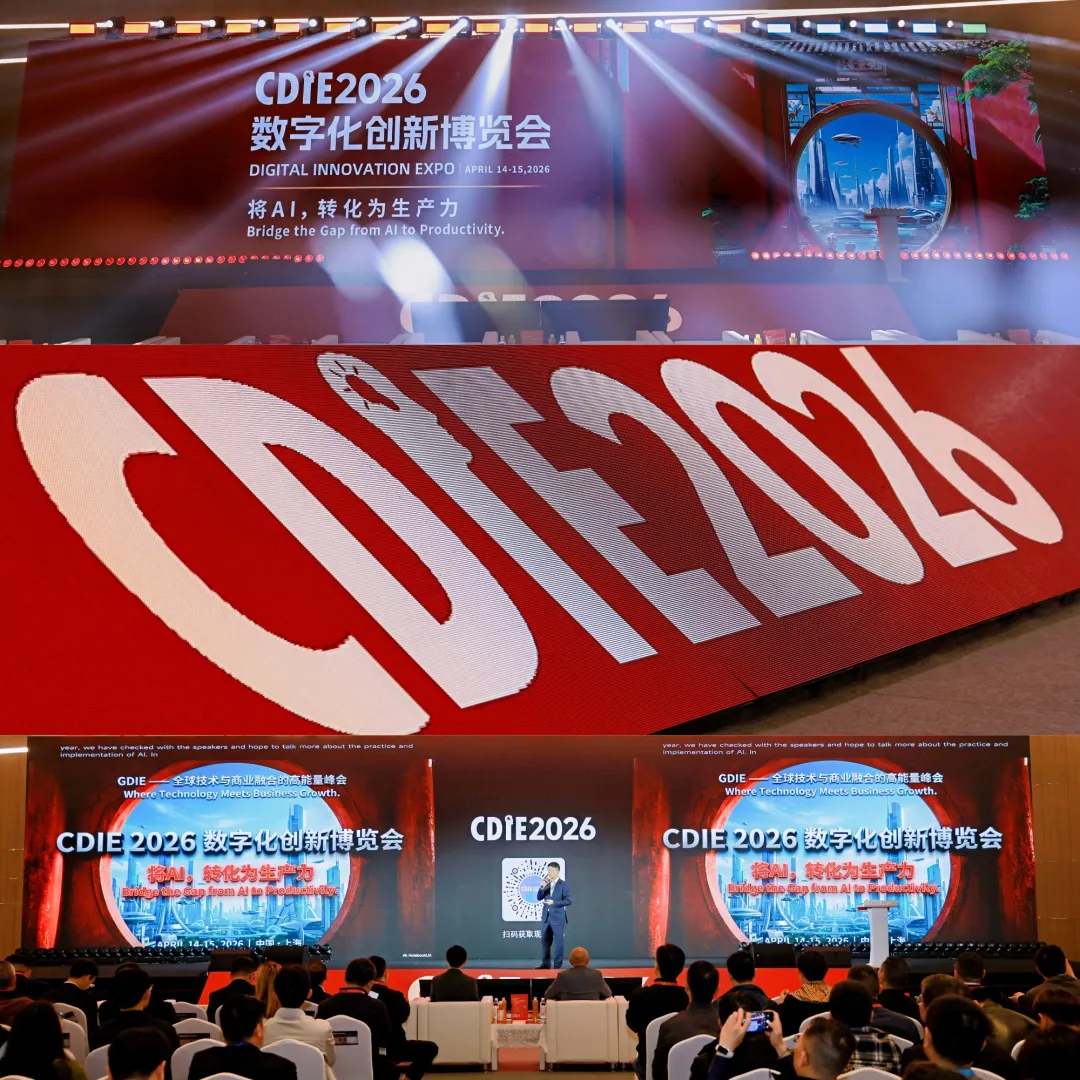
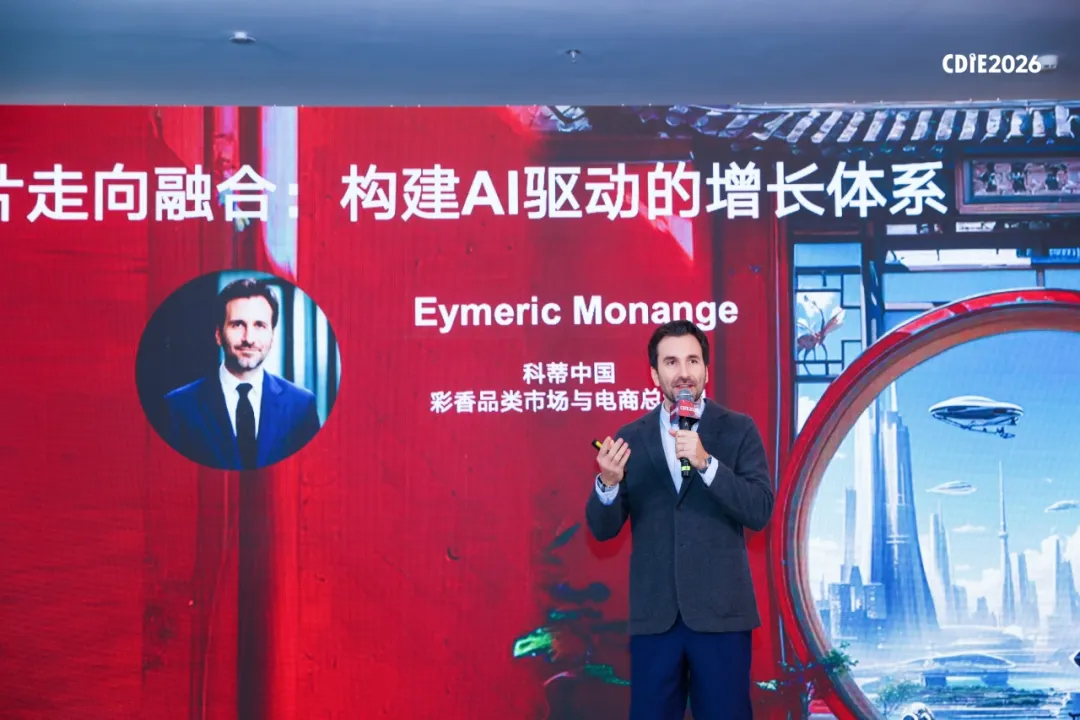
From April 14 to 15, 2026, CDIE 2026 was held in Shanghai. At the “All-Around Growth: AI Reshaping New Marketing Paradigms” forum, Eymeric Monange, General Manager of Fragrance Marketing & E-Commerce at Coty China, delivered a presentation that resonated strongly with the industry. His perspective, “From Fragmentation to Integration: Building an AI-Driven Growth System,” closely aligned with the central theme of this year’s conference: “Turning AI into Productivity.”
We spoke with the executive, who has more than a decade of experience in the premium beauty industry, shortly after his presentation. From his perspective, AI is not a universal solution, but a powerful tool that must be used with care and judgment. What truly determines the strength of a brand remains human creativity, brand consistency, and a deep understanding of consumers.
Eymeric Monange, General Manager of Fragrance Marketing & E-Commerce, Coty China
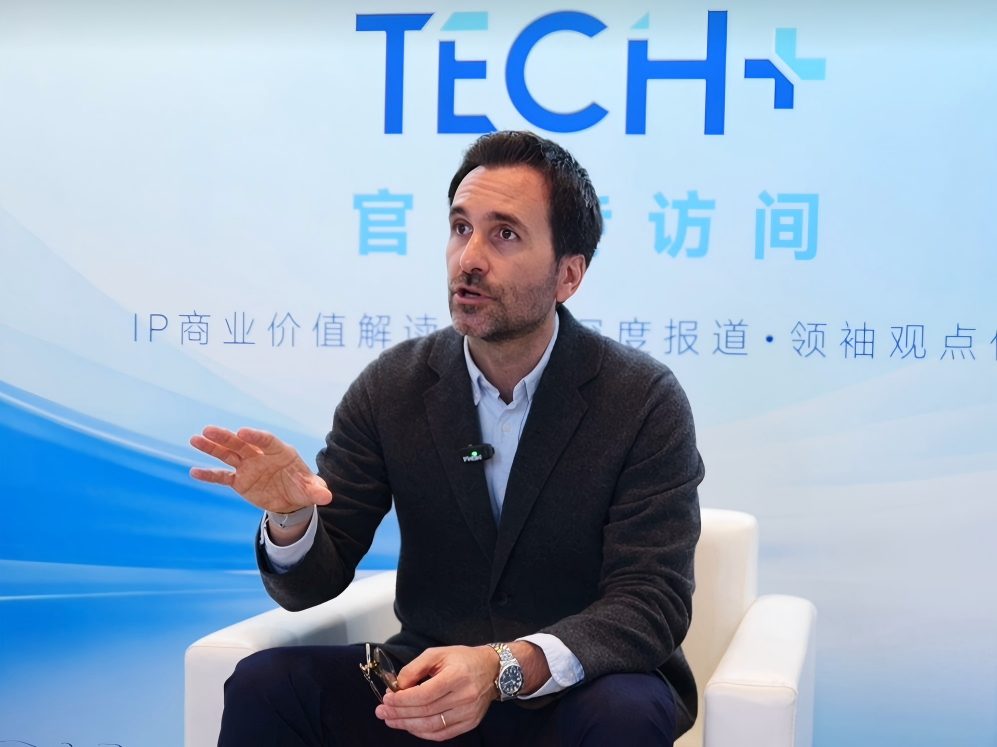
Below are highlights from the exclusive interview
Tech+:
Your CDIE presentation, “From Fragmentation to Integration,” was particularly thought-provoking. How do you view the growth potential and current challenges of China’s fragrance market? In terms of core consumer groups and emerging technologies such as AI, what strategies are brands adopting?
Eymeric Monange:
“Today, one of the biggest challenges facing the industry is the increasingly fragmented consumer journey. China’s fragrance market has significant growth potential. Category penetration is currently only around 5 percent, yet content creation and discussions around fragrances on social media continue to grow rapidly, indicating substantial room for expansion.
Today, premium fragrance consumption is concentrated among younger consumers aged 18 to 26. We need to understand their values and their desire for individual identity. Compared with the past, AI can now play a critical role much faster in identifying emerging market trends. That is what makes AI particularly fascinating.”
Tech+:
Premium beauty places strong emphasis on brand image and long-term value. How does your AI system balance brand building and performance conversion, which may appear to be contradictory goals, particularly in areas such as media strategy and content creation?
Eymeric Monange:
“This is a question that deserves deeper consideration. Generic, homogeneous content will eventually become commoditized and lose its distinctive value. When working with premium or luxury brands, you cannot simply adopt standardized content-generation models. Otherwise, you risk continuously weakening the desirability of the brand.
AI can serve as a creative support tool, but the luxury industry still relies on human inspiration and aesthetic judgment to differentiate itself from mass-market categories. AI itself does not undermine the foundations of a brand. What truly lowers a brand’s positioning is relying entirely on generic, homogeneous content creation.
Brand image is shaped by the consistency of execution, disciplined price management, and the richness of marketing campaigns and always-on strategies. Today, many brands are blindly pursuing rapid revenue growth. But brand building should not be measured by short-term explosive growth. Long-term consistency, stability, and sustained operations are what ultimately build brand value.”
Tech+:
Looking ahead, what do you think the next generation of AI-driven beauty growth systems will look like? What role will generative AI (AIGC) play in this evolution?
Eymeric Monange:
“This is a fascinating topic. Twenty years ago, we saw the rise of agile, emerging indie brands that began challenging the position of large groups in the industry. This trend will continue.
Today, with large language AI models, companies may be able to bypass complex hierarchical processes and identify consumer trends faster than large groups, while also shortening product time-to-market. This is one possible direction for the future of the beauty and fragrance industry.
Whether this development model is desirable is a separate question. But what I want to emphasize is that even in such a future, the brands that remain strong will still need to understand that true differentiation comes from human creativity and long-term consistency, rather than relying solely on algorithms and technology.”
Tech+:
This is your first time participating in CDIE. What is your impression of the CDIE platform, and what role do you think it should play in the future?
Eymeric Monange:
“Artificial intelligence will profoundly reshape how we discuss and approach business over the coming decades. The industry is still at an early stage, and there is an urgent need for different parties to connect, exchange ideas, and learn from one another. There is still a gap in understanding between business leaders and technology professionals.
When I share opportunities and challenges from the fragrance sector, it may also inspire technology professionals to explore new directions for innovation. These kinds of exchanges should become more regular, helping to genuinely bring businesses and technology solution providers closer together. That is exactly the kind of value CDIE can provide as a platform.”
Our conversation with Eymeric highlighted that the role of AI in the luxury industry is not necessarily about disruption, but about enabling brands to move faster and understand consumers more precisely, particularly in a dynamic market like China.
Yet he repeatedly emphasized that what truly differentiates one brand from another is not the sophistication of its tools, but its distinctiveness, the depth of its storytelling, and its ability to understand and preserve the emotional dimension of the consumer experience.
“At the end of the algorithm, there must still be people.”
Perhaps this is one principle that every luxury brand leader needs to keep in mind in the age of AI.

AI Market Research & Consumer Insights Provider
China's Leading Treasury Management Software Provider
AI落地解决方案及数字化创新服务提供商
A high-tech enterprise integrating product design, R&D, sales, and services.
Leading full-scenario data intelligence service provider in China.